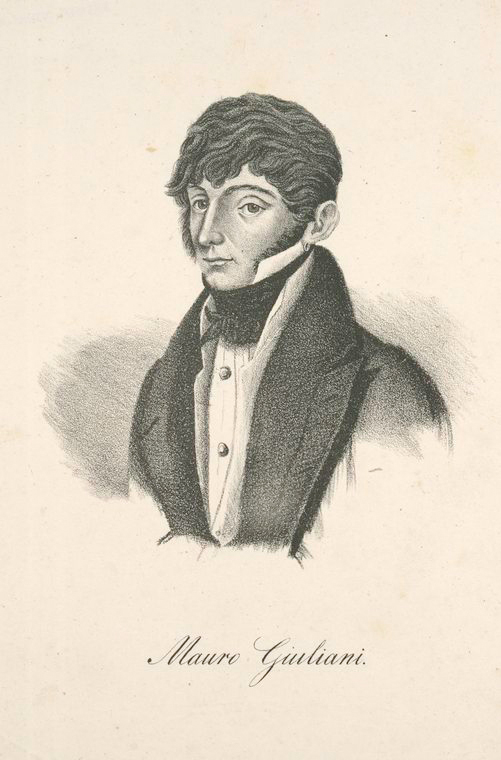
Mauro Giuliani

Mauro Giuliani (1781–1829): The “Paganini of the Guitar” 

Mauro Giuliani was the most celebrated guitar virtuoso of the 19th century. A central figure in the musical capital of Vienna, he elevated the guitar from a domestic accompaniment instrument to a formidable vehicle for concerto-level performance. 


🏛️ Biography and Professional Career

The Viennese Triumph

  • Rise to Fame: Born in Bisceglie, Italy, Giuliani moved to Vienna in 1806. He quickly became a celebrity in the city of Beethoven, Haydn, and Schubert.
  • The Elite Circle: He was a close associate of Ludwig van Beethoven and performed as a cellist in the world premiere of Beethoven’s 7th Symphony. Beethoven himself famously praised Giuliani, allegedly calling the guitar a “miniature orchestra.”
  • A International Star: After his decade of dominance in Vienna, he returned to Italy (Rome and Naples), where he continued to perform and compose until his death in 1829. 

The Virtuoso Performer

  • Giuliani was renowned for his extraordinary technical precision, particularly his rapid arpeggio playing and his “singing” melodic tone, which mirrored the bel canto style of Italian opera. 

🎸 Significance for Guitar Music

Giuliani’s impact on the guitar is monumental, providing the instrument with its first truly “grand” repertoire. 

1. Master of the Guitar Concerto

Giuliani was a pioneer of the Guitar Concerto. His Concerto No. 1 in A Major, Op. 30, is considered the first great concerto for the instrument, proving that the guitar could stand its ground against a full symphony orchestra. 

2. The “Rossiniane” and Operatic Influence

His six Rossiniane (Op. 119–124) are virtuosic fantasies based on themes by Gioachino Rossini. These works brought the excitement of the opera house to the six strings, requiring a level of technical mastery that remains a benchmark for professional guitarists. 

3. Structural Sophistication

With works like the Gran Sonata Eroica (Op. 15), Giuliani applied the rigorous “Sonata Form” of the Viennese masters to the guitar. This gave the instrument a structural seriousness and intellectual depth that it had previously lacked. 

4. Pedagogical Foundation (Op. 1)

His Studio per la Chitarra, Op. 1, contains the famous 120 Right-Hand Studies. These arpeggio exercises are still the gold standard for developing right-hand technique and are practiced by virtually every classical guitarist in training today. 

Leave a Reply

Loading...